|
People have questions before they decide whether a program is right
for them. Here are direct answers to the questions people ask about
Living Gratitude Now, gratitude itself, affirmation training, and
how to get the greatest benefit from the program.
Choosing the Right Version
1.
What is the free Living Gratitude Now YouTube video?
The
free YouTube video is Volume One of Living Gratitude Now. It
contains 68 gratitude statements, with every statement repeated
three times using different vocal emphasis and feeling.
It
is a complete and valuable listening session—not a five-minute
preview. But it is still only one of the complete program’s three
volumes.
2.
How is the complete program different from the free YouTube video?
The
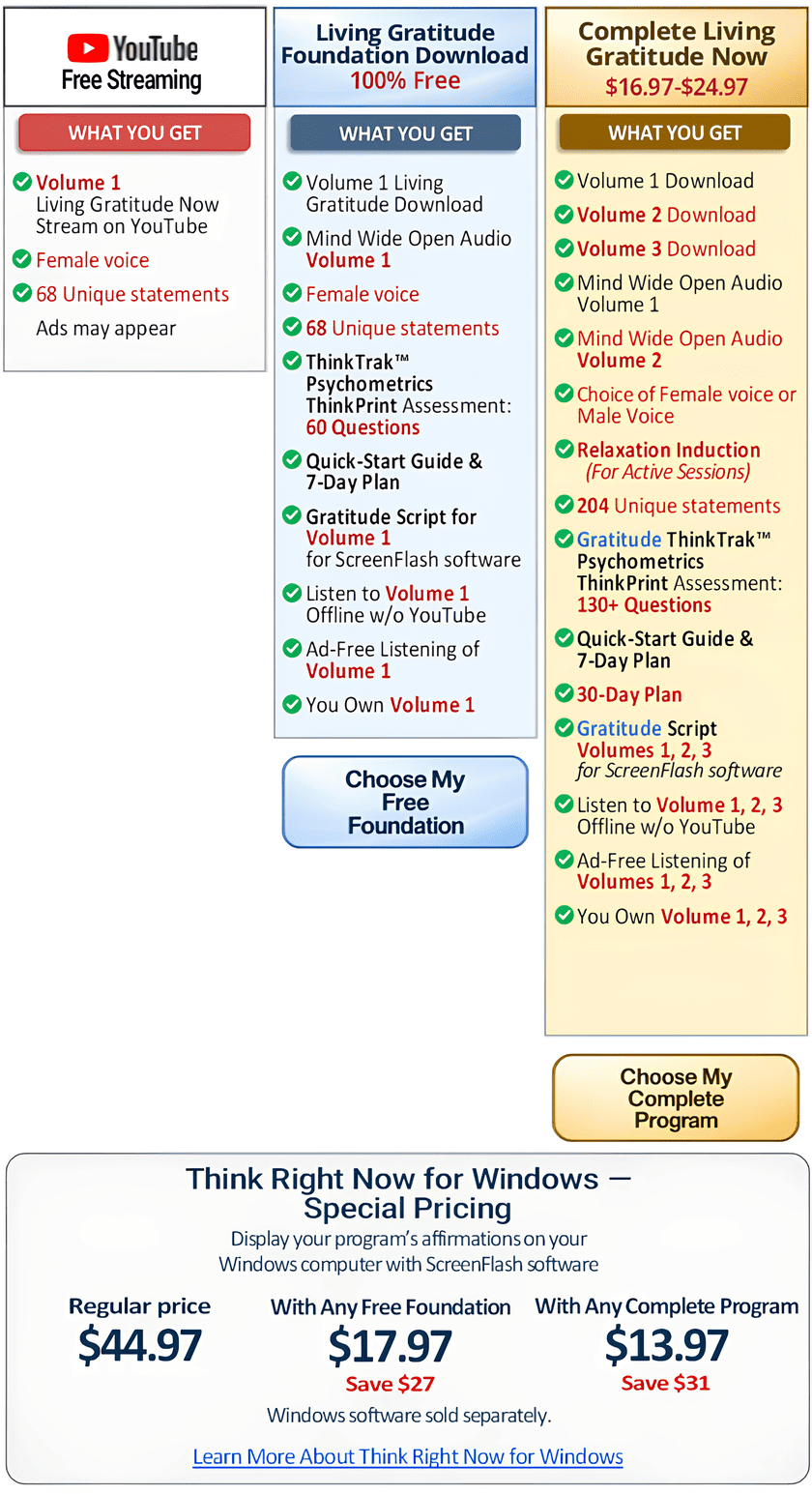
free YouTube video gives you Volume 1: 68 gratitude statements
recorded in the female voice. You can stream it free whenever you
have access to YouTube, although ads may appear.
The
Complete Living Gratitude Now Program gives you Volume 1, Volume 2,
and Volume 3—204 unique gratitude statements altogether—with your
choice of the female- or male-voice edition. All three volumes are
downloadable, ad-free MP3s, so you have your own copies and can loop
them, add them to playlists, turn off your screen, and listen
without keeping YouTube open.
You
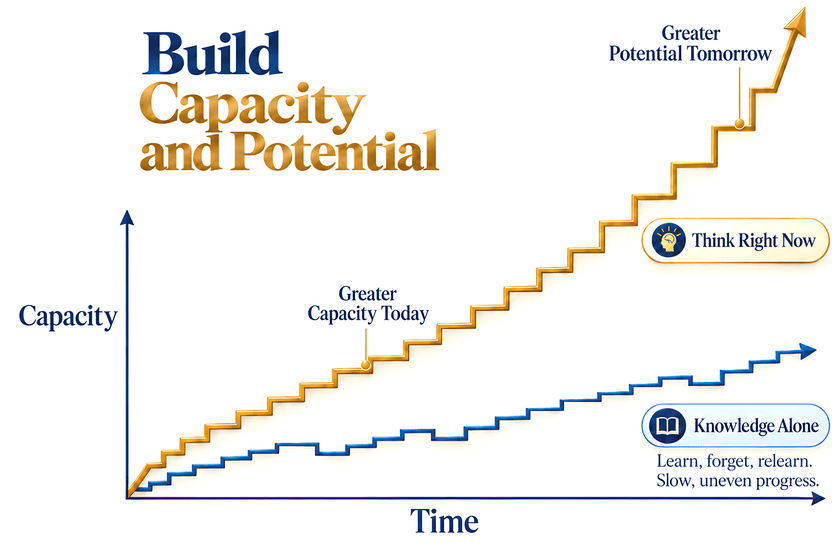
also receive a separate relaxation induction for each volume, the
expanded 144-statement Day 1 and Day 30 Gratitude Progress Profile,
the 7-Day Foundation Quick-Start Plan, the Complete 30-Day Listening
Plan, and printable, ScreenFlash-ready scripts for all three
volumes.
Complete Program customers also receive the lowest available
customer price on Think Right Now for Windows.
3.
What comes with the complete Living Gratitude Now program?
You receive:
- Volume 1, Volume
2, and Volume 3 as downloadable, ad-free MP3s—204 unique gratitude
statements altogether
- Your choice of the female- or male-voice edition
- A separate relaxation-induction track for each volume
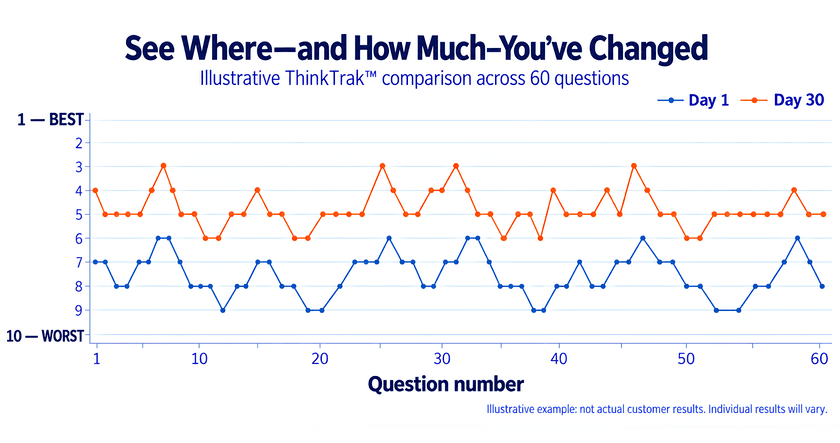
- The expanded 144-statement Gratitude Progress Profile for Day 1
and Day 30
- The 7-Day Foundation Quick-Start Plan
- The Complete 30-Day Listening Plan
- The complete printable and ScreenFlash-ready scripts for Volumes
1, 2, and 3
- The lowest available customer price on Think Right Now for Windows
It is a one-time
purchase. You receive your own downloadable copies, so you can
listen without YouTube. You can create playlists, loop the
recordings, and use them whenever you choose.
4.
Why does the Complete Program include three volumes?
Volume 1 establishes the foundation with 68 gratitude statements.
But gratitude is not one general attitude that automatically carries
into every part of life. A person may deeply appreciate family and
still dwell constantly on money problems, feel thankful for good
health but resent work, or enjoy life when everything is going
smoothly and lose that appreciation as soon as something goes wrong.
Volumes 2 and 3 add 136 entirely different statements that bring the
conditioning into more areas of life and more of the situations that
affect how you feel each day. Together, all 204 statements help you
spend less time focused on what is missing, wrong, delayed, or
disappointing—and receive more satisfaction, enjoyment, and peace
from the life you are living now.
The
three volumes were deliberately designed as one complete program.
Volume 2 and Volume 3 are not leftovers or repetitions added simply
to make the program longer.
5.
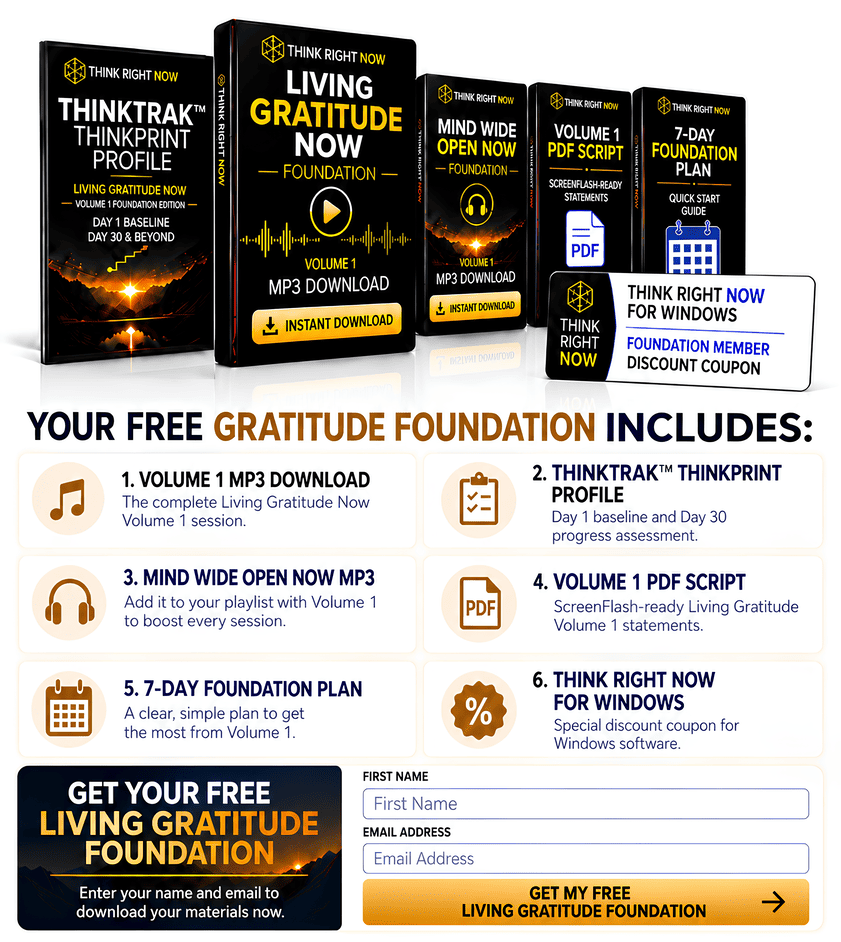
What is The Living Gratitude Foundation?
It
gives you the Volume One MP3 so you can listen without YouTube,
along with the 7-Day Foundation Plan and the Volume One
ScreenFlash-ready statement file. You also get a hefty subscriber
discount on Think Right Now for Windows.
6.
Is Living Gratitude Now a subscription?
No.
The Complete Program is a one-time purchase of $24.97.
There are no monthly charges. You receive your own downloadable
copies of the program and can save them on your devices, make backup
copies for yourself, and use them whenever you want.
7.
What devices can I use?
The
MP3 recordings can be played on virtually any phone, tablet, laptop,
or desktop computer that supports ordinary audio files.
Once you have downloaded them, you do not need to keep YouTube open
or remain connected to the internet whenever you listen.
Think Right Now for Windows is separate ScreenFlash software made
specifically for Windows computers. It is not required to use the
audio program.
8.
Why is the Complete Program only $24.97?
Comparable Think Right Now programs of this size previously sold for
$59.97 as physical CDs. That price had to cover manufacturing,
packaging, storage, and delivery.
Living Gratitude Now is delivered digitally. Removing those expenses
allows us to offer the complete three-volume program at the current
amount of $24.97 without reducing the size or quality of the
program.
You
also receive the lowest available customer price on Think Right Now
for Windows.
What Gratitude Really Means
9.
What does gratitude actually mean?
Gratitude is recognizing and appreciating something good, valuable,
helpful, meaningful, or beautiful in your life.
Sometimes it is something enormous, such as another chance at life
or someone you deeply love. Sometimes it is a comfortable chair, a
good meal, a funny conversation, or ten quiet minutes at the end of
a difficult day.
A
feeling of gratitude does not create those things. It helps you
recognize their value instead of gradually taking them for granted.
10.
Why can gratitude change how life feels?
What your mind repeatedly returns to affects your experience of your
life.
You
may have fifty things going right and two things going wrong. But if
your thoughts circle those two problems all day, it can feel as
though your whole life is wrong.
Gratitude helps you recognize the good things that stress and
familiarity can push into the background—and feel their value: the
love, relief, appreciation, joy, comfort, or good fortune they
bring.
The
problems may still be there, but they are no longer the only things
shaping how life feels. You receive more happiness and satisfaction
from the good that was already there.
11.
Can gratitude really make me happier?
It
can help considerably.
Happiness is affected not only by what happens to you, but also by
how much satisfaction, pleasure, meaning, and love you receive from
what is already happening.
Gratitude does not guarantee that you will feel happy every minute.
It helps you stop postponing all happiness until some future
accomplishment, purchase, relationship, or change finally arrives.
12.
Is gratitude the same as positive thinking?
No.
Positive thinking is a much broader term that can include
confidence, hope, encouragement, optimism, and expecting favorable
results.
Gratitude is the recognition and appreciation of something valuable.
You may think positively about something you hope will happen in the
future. You feel grateful for something you have received,
experienced, remembered, recognized, or appreciated.
13.
Is gratitude religious or spiritual?
It
can be, but it does not have to be.
A
religious person may feel grateful to God. Someone else may
appreciate family, friendship, health, nature, opportunity,
laughter, kindness, or simply being alive.
Living Gratitude Now does not require or address any particular
religious or spiritual belief.
14.
Does gratitude mean ignoring problems or pretending everything is
fine?
No.
You
can recognize that something is painful, unfair, frightening, or
disappointing while also appreciating the people helping you, the
choices still available to you, or the parts of your life that
remain good.
Gratitude does not remove an unpleasant part of the truth. But it
does keep that one part from becoming the whole truth.
15.
How is gratitude different from toxic positivity?
Toxic positivity pressures people to stop being upset, look on the
bright side, or feel grateful simply because someone else has it
worse.
Honest gratitude does not tell you what you are permitted to feel.
You can be hurt and grateful, angry and grateful, frightened and
grateful, or heartbroken and grateful at the same time.
Gratitude adds another truthful part of your experience. It does not
erase your natural human reactions.
16.
What if gratitude feels forced or unnatural to me?
That is one of the reasons to practice it.
You
do not have to already feel deeply grateful for every statement in
the program. The purpose is not to pass a gratitude test or pretend
you feel something you do not.
The
goal is to make grateful thoughts, interpretations, and responses
easier and more natural for your mind to return to over time. Just
as repeated worry can make worried thinking more automatic, repeated
gratitude can strengthen a different mental habit.
You
are not being asked to force an emotion. You are giving your mind
repeated practice with the thoughts and perspectives you want to
become more natural.
17.
Do I have to be grateful for painful experiences?
No.
You
do not have to be grateful that someone hurt you, that you became
ill, that you lost someone you loved, or that something terrible
happened.
You
may eventually appreciate the courage, wisdom, patience, compassion,
or strength you developed while living through it. That is very
different from pretending the painful event itself was good.
18.
Can I be grateful and still want more from life?
Absolutely.
You
can appreciate your home and still want a better one. You can value
your work and still want greater success. You can appreciate your
present health and still want to become stronger.
Gratitude allows you to receive satisfaction from what you have now.
Ambition gives you a reason to keep building. One does not cancel
the other.
19.
Does gratitude make people passive or too willing to accept bad
treatment?
Not
healthy gratitude.
You
can appreciate someone’s good qualities and refuse to accept harmful
behavior. You can value your job and still expect fair treatment.
You can appreciate what an experience taught you and decide never to
repeat it.
Gratitude should never require you to abandon your judgment,
boundaries, standards, or self-respect.
20.
Why do people take good things for granted?
The
mind gets used to what remains present.
The
new house becomes simply the house. The person you once could not
wait to see becomes the person sitting across the room. The body
that carries you everywhere may receive very little thought until
something hurts.
Gratitude helps ordinary things continue to feel valuable while they
are still part of your life—not only after they are damaged,
changed, or gone.
What Gratitude Can Change
21.
Can gratitude help me stop dwelling on everything that is wrong?
Yes. It can help restore balance.
You
still need to recognize a leaking roof, an unpaid bill, an unhealthy
relationship, or anything else requiring action. The problem begins
when your mind keeps replaying what is wrong long after useful
thinking has ended.
Gratitude gives your attention somewhere worthwhile to go after you
have done what you reasonably can about the problem.
22.
Can gratitude help when I feel anxious?
It
may help you regain perspective.
An
anxious mind often searches for danger, loss, uncertainty, and
everything that could go wrong. Gratitude directs some of your
attention toward what remains safe, supportive, valuable, and
dependable.
Living Gratitude Now is a personal-development program, not
treatment for panic attacks or an anxiety disorder. But gratitude
can prevent anxious thoughts from becoming the only information your
mind considers.
23.
Can gratitude help reduce stress?
It
can help reduce the feeling that everything is going wrong at once.
Stress tends to narrow your attention around demands, problems,
unfinished work, and possible consequences. Gratitude brings the
people, abilities, resources, progress, comforts, and choices still
available to you back into the picture.
The
responsibilities may still exist, but you no longer have to
experience them as though nothing in your life is supporting you.
24.
Can gratitude help when I feel depressed or discouraged?
Gratitude may help you reconnect with parts of life that still have
meaning, value, possibility, or emotional support.
It
does not require you to deny pain or force yourself to feel
cheerful. It gives discouragement less opportunity to become the
only way you see yourself, your future, and your life.
Living Gratitude Now is a personal-development program, not
treatment for clinical depression. Serious, persistent, or worsening
depression deserves qualified professional care.
25.
Can I listen before bed or while I sleep?
Yes.
You
can listen quietly before bed and allow the regular affirmation
tracks to continue playing if you fall asleep. Complete Program
customers may also use the relaxation induction once at the
beginning to settle into a relaxed listening session.
Keep the volume comfortable. The program is not presented as a
treatment for insomnia, but it can give your mind something more
reassuring and worthwhile to return to than replaying everything
that went wrong or remains unfinished.
26.
Can gratitude improve my relationships?
It
can change what you recognize, express, and respond to in other
people.
When your attention goes mainly to what someone forgot, failed to
do, or did differently than you wanted, that person may feel
constantly criticized and rarely valued.
Gratitude makes you more likely to recognize effort, affection,
loyalty, kindness, patience, and everyday contributions—and to say
so. People generally respond differently when they know they are
seen and appreciated.
27.
Can gratitude help during grief or very difficult times?
Yes, but it should never be used to hurry grief or cover it up.
You
can be deeply grateful for someone and devastated that the person is
gone. You can treasure the years you shared and still wish with all
your heart that you had more.
Gratitude does not remove the sorrow. Sometimes it reminds you that
the sorrow is so deep precisely because someone or something
mattered so much.
28.
Does gratitude attract abundance or bring more good things into my
life?
Gratitude does not guarantee that money, relationships, or
opportunities will simply appear.
What it can do is help you recognize opportunities sooner, treat
people better, care for what you already have, respond more
generously, and approach life with greater hope and involvement.
Those changes can produce stronger relationships, better decisions,
new opportunities, and improved results. The good things do not
appear merely because you used the word gratitude. Your changed
thinking affects what you recognize and what you do next.
Why
These Affirmations Work Differently
29.
What are gratitude affirmations?
Gratitude affirmations are statements designed to strengthen
thoughts and beliefs that produce gratitude.
You
already repeat affirmations every day, usually without deliberately
choosing them.
“Nothing ever works out for me” is an affirmation.
“I
can handle this” is an affirmation.
“I
am fortunate to have these people in my life” is an affirmation.
Repeated thoughts become habits of mind. The real question is what
your automatic self-talk keeps teaching you to notice, feel, expect,
and do.
30.
Do gratitude affirmations really work?
They can—but not because they are magic sentences.
The
thoughts and beliefs you repeatedly feed become stronger. The
thoughts and beliefs you stop feeding become weaker.
By
listening often and long enough, grateful thoughts can begin
appearing more automatically, influencing what you notice, how you
feel, how you treat people, and how you respond when something goes
wrong.
Living Gratitude Now gives you a structured way to reinforce those
thoughts instead of expecting a few occasional reminders to
overpower years of habitual negative thinking.
31.
Why do some affirmations feel fake?
Many affirmations are exaggerated, absolute, too far from what the
listener presently believes, or written in language no normal person
would ever use.
When a statement sounds ridiculous, your mind may immediately
produce evidence against it.
Living Gratitude Now uses specific, natural, grounded statements.
The goal is not to make you claim that your entire life is perfect.
It is to help you recognize and strengthen grateful thoughts that
make sense.
32.
Can positive affirmations backfire?
Poorly written affirmations can create resistance.
A
statement may make you feel worse when it sounds completely
unbelievable or forces you to compare an enormous claim with
everything you currently dislike about your life.
Living Gratitude Now does not depend on one gigantic declaration. It
uses many specific and believable statements that give gratitude
practical ways to enter your thinking.
33.
Do I have to believe every statement immediately?
No.
Some statements may feel completely true the first time you hear
them. Others may express thoughts and beliefs you want to strengthen
but do not fully accept yet.
You
do not have to argue with yourself or force an emotion. Listen,
consider the statement, and allow repetition to make it easier to
accept and think automatically.
34.
Will I hear the same statements repeated in all three volumes?
No.
Volume 1 contains 68 unique gratitude statements and is included in
the free YouTube version, the free Foundation Download, and the
Complete Program.
Volume 2 contains another 68 entirely different statements. Volume 3
contains the final 68. The Complete Program therefore contains 204
unique statements comprising Volume 1, Volume 2, and Volume 3.
Volume 2 and Volume 3 are not repeats, alternate recordings, or
leftover statements added to make the program longer.
35.
Why is each statement spoken three times?
Repetition helps you remember. In the Suggestopedia method developed
by Dr. Georgi Lozanov, new material was repeated three times with
different vocal emphasis to make it more memorable without making
the repetition sound dull or mechanical.
When you hear many different statements only once, some may be
forgotten almost immediately. Hearing each statement three times
gives your mind more opportunity to hold onto it.
That matters in everyday life. When you are frustrated with someone
you love, worried about money, disappointed by a problem, or having
a difficult day, a grateful statement you remember can come back to
mind and help you recognize what is still good. The more easily you
remember these thoughts, the more easily they can become part of the
way you naturally think and respond.
36.
Is Living Gratitude Now hypnosis or subliminal programming?
No.
Every affirmation is spoken clearly. The statements are not hidden
beneath the music, sped up beyond recognition, or secretly inserted
into the recording.
The
optional relaxation induction is guided relaxation designed to
prepare you for a focused listening session. It is not hypnosis. You
remain aware and in control and can pause or stop the program
whenever you choose.
37.
What does Accelerated Neuro Conditioning mean?
Accelerated Neuro Conditioning is Think Right Now’s name for
combining clearly spoken affirmations with repetition, measured
spacing, varied vocal emphasis, music, and an optional relaxation
induction.
The
format was influenced by principles associated with Suggestopedia,
the relaxed-learning work developed by Dr. Georgi Lozanov.
The
idea is not that music magically forces information into your brain.
It is that important thoughts receive focused, repeated, emotionally
engaging exposure until they can begin influencing your automatic
beliefs and responses.
Getting the Greatest Benefit
38.
How often should I listen?
Daily listening is ideal, especially during your first 30 days.
Your present habits of thought were built through repetition over
months, years, and decades. For the fastest, deepest, and
longest-lasting change, listen often and give the program enough
time to compete with all that previous repetition.
Foundation subscribers receive the 7-Day Foundation Quick-Start
Plan. Complete Program customers also receive the Complete 30-Day
Listening Plan. Both remove the guesswork and show you how to make
the program part of your regular life.
39.
What are the best ways to use the recordings?
Each Complete Program volume has two separate tracks: a relaxation
induction followed by the affirmation track.
For
a dedicated session, play the induction first and allow the
corresponding affirmation volume to follow. Sit or lie down
somewhere comfortable and give the session your attention.
For
background listening, daytime listening, driving, or playlists
containing several volumes or programs, leave all relaxation
inductions out and play only the regular affirmation tracks.
At
bedtime, you may use an induction before the affirmation volume and
allow the affirmations to continue quietly if you fall asleep.
Never use a relaxation induction while driving, operating machinery,
studying, working, or doing anything requiring your full alertness.
40.
Do I need to concentrate, memorize the statements, or repeat
everything aloud?
No.
You
do not need to treat the program like an exam. Listen with
comfortable attention and allow the statements to guide your
thoughts.
When a line feels especially right, you may agree with it, picture
it, connect it with your own life, smile, or repeat it aloud. None
of that is required.
You
do not have to memorize or analyze every statement. What matters
most is listening often enough and long enough for the statements to
begin influencing your automatic thoughts and beliefs.
|
Receive More Joy, Love, and
Satisfaction From the Life You're Living Now |
Get the Complete Living
Gratitude Now Program
- All three
volumes—204 unique affirmations, with your choice of a male or
female voice and a relaxation induction
- Mind Wide Open
Now
- ThinkTrak™
Psychometrics Gratitude Progress Profile—measure your progress
specifically with Living Gratitude Now
- Your seven-day
Quick Start Guide, 30-day listening plan, and printable script
- A massive $31
discount on Think Right Now for Windows
Download and keep
everything. Listen
offline, ad-free, with your phone’s screen off—without keeping
YouTube open.

g |